
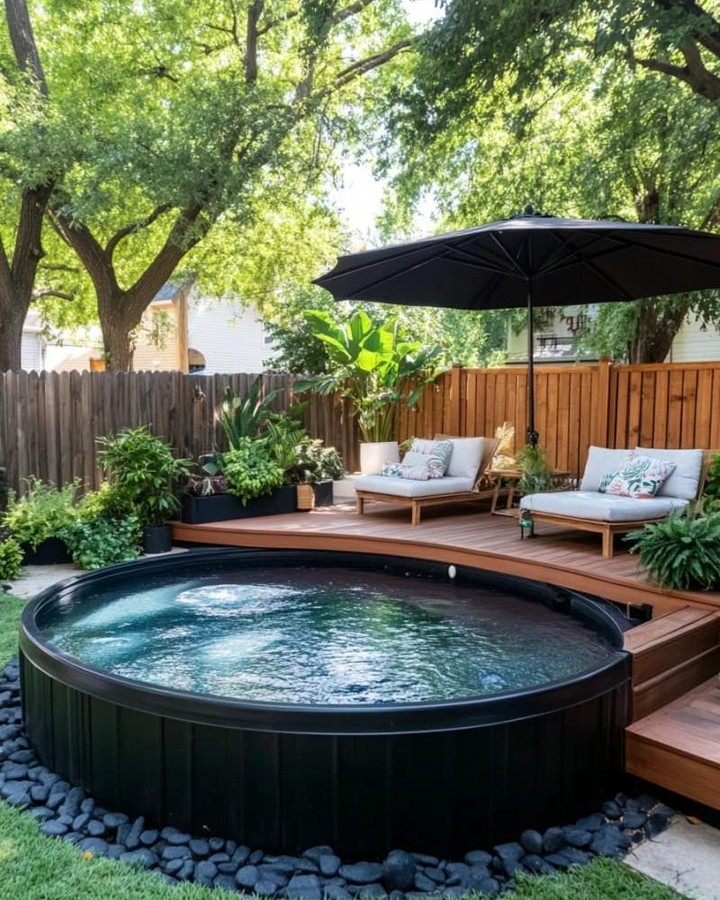
Outdoor Jacuzzi Ideas: Why the Setting Matters as Much as the Jacuzzi Itself
A jacuzzi is an investment that either becomes one of the most consistently used features of a home or sits largely unused depending on one factor more than any other: whether the space around it was designed to make using it feel genuinely appealing. A jacuzzi installed on a bare concrete pad with no privacy and no atmosphere gets used rarely. The same jacuzzi integrated into a thoughtfully designed outdoor space with good lighting, proper privacy, and comfortable surroundings gets used throughout every season.
The fifteen ideas in this guide cover every approach to outdoor jacuzzi design from fully integrated deck installations to simple, affordable setups that transform a standard backyard jacuzzi into a proper relaxation destination. Every one of them addresses both the practical and atmospheric qualities that make a jacuzzi genuinely worth having rather than an expensive feature that looked good in the catalogue.
Deck-Integrated Jacuzzi: Built In, Not Placed
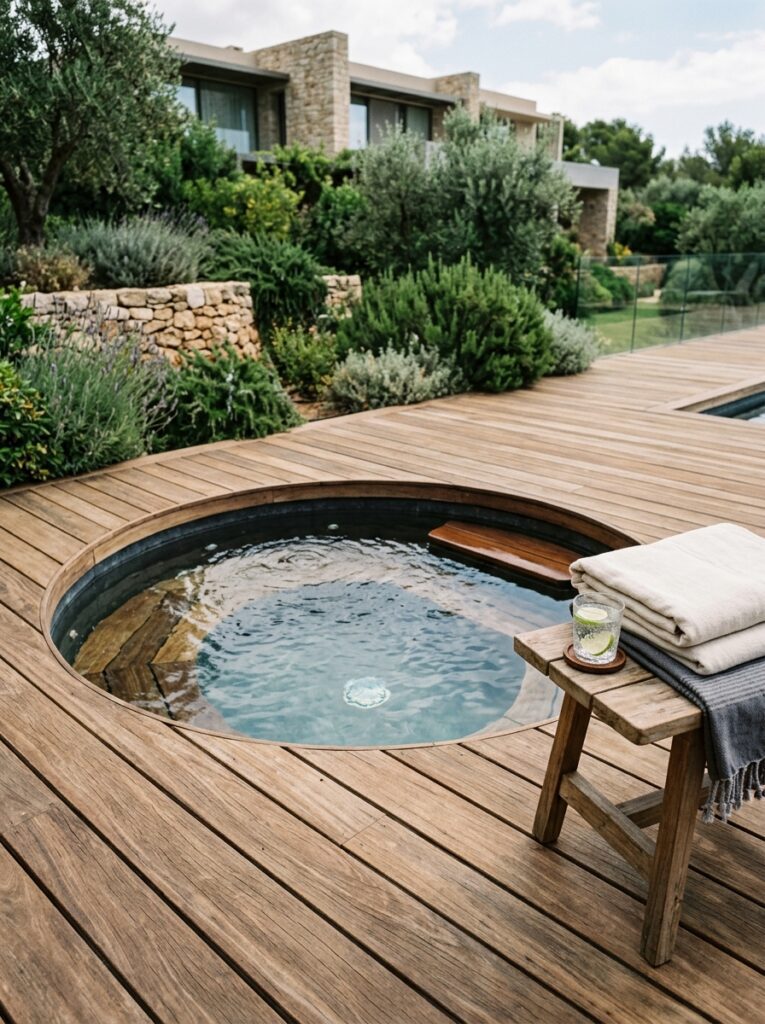
A deck-integrated jacuzzi sits flush within the decking rather than sitting on top of it as a separate object. The result is a polished, architectural quality that a freestanding jacuzzi on any surface cannot replicate because the jacuzzi becomes part of the outdoor structure rather than an addition to it.
The practical advantages extend beyond appearance. A deck-integrated installation makes entry and exit significantly easier because the step down into the water is lower and more controlled. The surrounding deck surface provides natural space for towels, drinks, and seating without any separate furniture being needed. Natural hardwood decking in warm tones creates the most appealing visual combination with most jacuzzi shell colours. Composite decking provides greater durability and lower maintenance over time at a similar visual quality. This is the installation approach for homeowners who want their jacuzzi to look like it was always part of the outdoor design rather than something purchased separately and placed wherever it would fit.
Pergola-Covered Outdoor Jacuzzi: Shelter Without Enclosure
A pergola over an outdoor jacuzzi extends the usable season significantly while maintaining the outdoor quality that makes an exterior jacuzzi different from an indoor spa. The pergola provides shade from direct summer sun, shelter from light rain, and a defined overhead boundary that makes the jacuzzi area feel like a proper outdoor room rather than simply a feature placed in the garden.
Climbing plants trained up the pergola posts and along the beams over several growing seasons create a canopy that adds organic texture and seasonal variation to the space. String lights woven through the overhead structure provide warm evening illumination that transforms the area after dark. Outdoor curtains hung on the sides add privacy and a spa-like atmosphere when drawn. The pergola-covered jacuzzi is specifically the right choice for gardens where extended outdoor living is the goal and where a fully enclosed structure would feel too permanent or too similar to an indo
Garden-Surrounded Jacuzzi Spa: Privacy and Nature Together
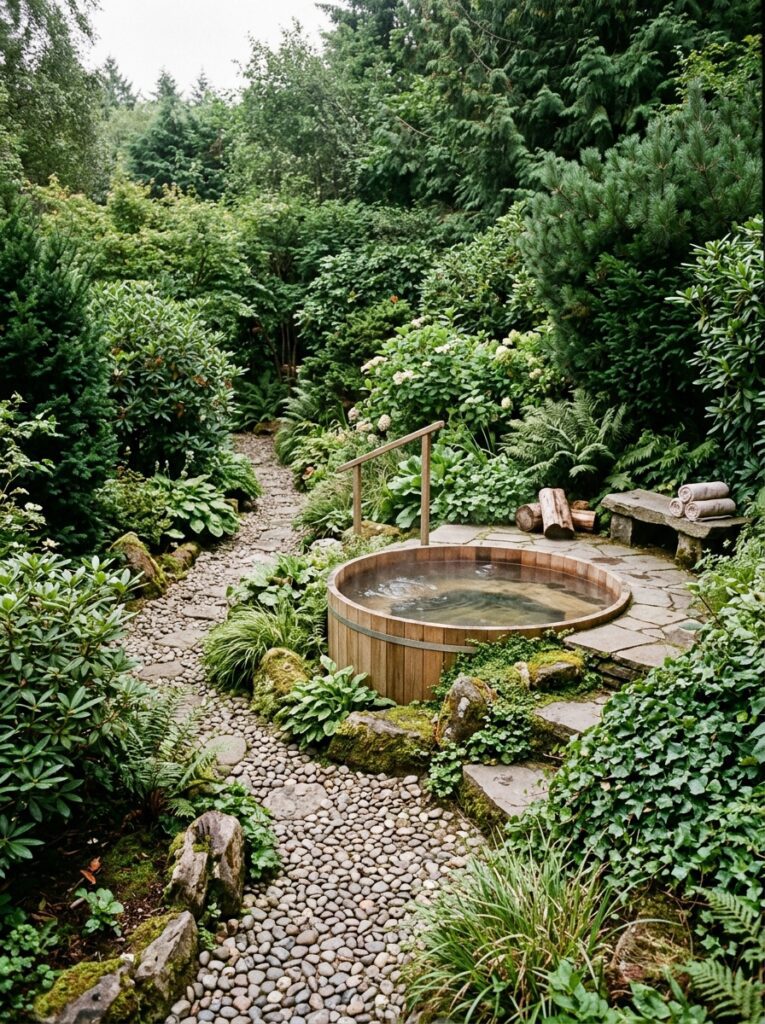
Placing a jacuzzi within a planting scheme rather than on a hardscape area creates a genuinely different experience from the same jacuzzi in a more architectural setting. The surrounding plants provide natural privacy through their height and density. The organic material of living planting softens the engineered quality of the jacuzzi shell and equipment. The changing quality of the garden through the seasons gives the jacuzzi area a different character in every month of the year.
Dense evergreen planting on the most overlooked sides provides year-round privacy without the visual heaviness of a solid fence or wall. Flowering shrubs and perennials on the more sheltered sides add seasonal colour. Decorative stone, pebble pathways, and specimen plants help the jacuzzi feel embedded within the garden rather than placed in front of it. A garden-surrounded jacuzzi suits homes where the garden itself is valued and where the jacuzzi should feel like it belongs to the outdoor environment rather than being imported into it.
Rooftop Jacuzzi Setup: The Urban Luxury Solution
A rooftop jacuzzi transforms unused flat roof space into a private luxury retreat that offers views and a sense of elevation from the surrounding environment that ground-level gardens cannot provide. In urban homes where garden space is limited or absent, the roof becomes the only available outdoor area, and a well-designed rooftop jacuzzi installation creates an outdoor living quality that most urban residents would not otherwise have access to.
The technical requirements of a rooftop installation are more significant than for ground-level alternatives and must be addressed before purchase. Structural load calculations confirm whether the roof can support the filled weight of the jacuzzi, which is considerably greater than the empty weight. Safety railings that meet local building regulations are essential on every exposed edge. Wind screens or glass panels protect users from the increased wind exposure at roof level while maintaining the view quality that makes the installation worthwhile. A rooftop jacuzzi done properly is one of the most impressive outdoor living investments available for an urban property.
Sunken Outdoor Jacuzzi: Modern Aesthetics Through Flush Installation
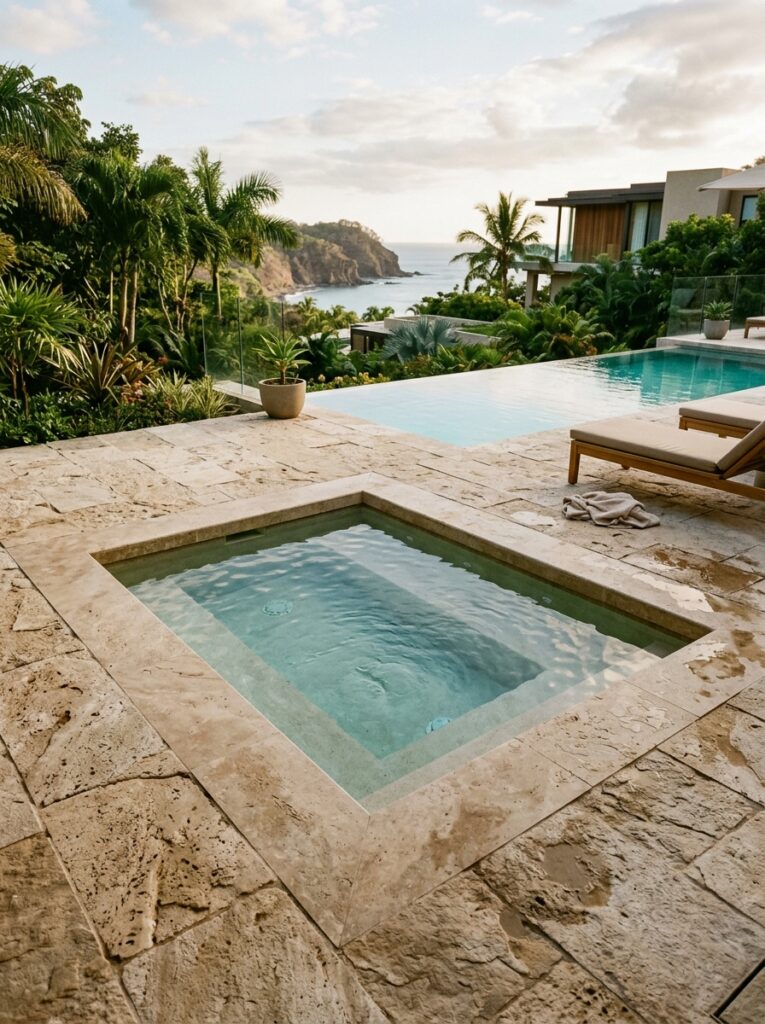
A sunken jacuzzi, installed below the surrounding surface level rather than sitting above it, creates the cleanest and most contemporary visual result of any outdoor jacuzzi approach. The shell disappears into the landscape rather than sitting as a visible object within it. The surrounding surface, whether stone, concrete, or timber, continues uninterrupted to the water’s edge, creating a seamless, resort-quality appearance.
The practical advantages of a sunken installation include easier entry and exit because the step down to the water level is smaller, and the visual cleanliness of the space because there are no cabinet panels or external shell surfaces to manage and maintain. The excavation and installation process is more complex and more expensive than a standard surface installation, which makes this approach most appropriate for new builds or major garden renovations where the ground works are already being undertaken. For gardens where the visual quality of the overall design is the priority, the sunken jacuzzi consistently delivers the most architecturally impressive result.
Wood-Clad Jacuzzi Design: Natural Material That Ages Beautifully
Wood cladding applied to the cabinet panels of a standard outdoor jacuzzi transforms the exterior appearance from the manufactured quality of the original shell to the warm, natural character of real timber. Cedar, teak, and treated hardwood are all popular choices because they handle outdoor exposure with minimal maintenance while retaining their visual quality over years of seasonal weather.
The natural warmth of wood cladding suits jacuzzis placed within garden settings, on timber decking, and in outdoor spaces where the overall design direction values natural materials. It suits farmhouse, Scandinavian, and contemporary rustic aesthetics particularly well. The cladding also provides an additional layer of insulation around the cabinet panels that reduces heat loss and improves the jacuzzi’s energy efficiency during cold weather use. Wood-clad jacuzzis age gracefully, developing a patina over time that adds character rather than creating the appearance of deterioration.
Privacy Screen Jacuzzi Area: Seclusion Without Full Enclosure
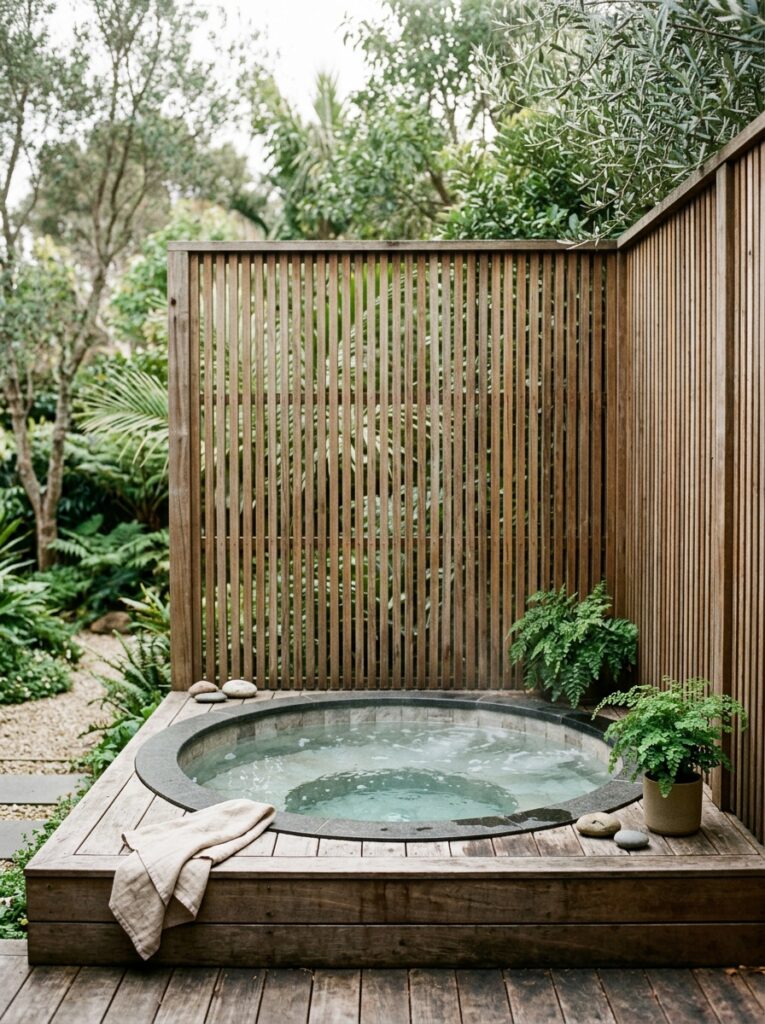
A privacy screen creates a defined, secluded jacuzzi area in a garden that is overlooked by neighbouring properties without requiring the full cost, permanence, or visual weight of a fence or wall on all sides. Strategic placement of screens on the most exposed elevations provides the privacy needed while leaving the other directions open to the garden and the sky.
Hardwood slatted screens with small gaps between each board allow air circulation and light to pass through while blocking direct lines of sight from adjacent properties. Bamboo panels are a faster-growing and more affordable alternative that suits relaxed, garden-focused aesthetics. Tensioned wire systems with climbing plants trained along them create living privacy screens that improve with every growing season. The privacy screen approach is specifically valuable in shared suburban gardens where complete enclosure would reduce the garden’s quality of light and openness while a targeted screen provides adequate seclusion for comfortable jacuzzi use.
Stone Patio Jacuzzi: Timeless Durability With Natural Elegance
A jacuzzi installed within a stone patio creates a combination that suits both traditional and contemporary exterior designs because natural stone’s timeless quality connects it naturally to either aesthetic direction. The stone surface provides a non-slip, durable, and visually rich surroundings that improves the overall quality of the jacuzzi area beyond what manufactured alternatives achieve at comparable cost.
Natural sandstone, limestone, and slate all suit outdoor jacuzzi areas well because their surface textures provide grip when wet and their tonal variation gives the patio area a visual depth and quality that uniform manufactured surfaces do not have. Large format stone tiles minimize the number of grout joints visible across the patio surface, which creates a cleaner and more expansive visual result. The weight and permanence of a stone patio installation also provides a proper foundation for the jacuzzi that eliminates the movement and settling issues that less substantial bases can develop over time.
Minimalist Outdoor Jacuzzi: The Approach That Lets the Jacuzzi Lead
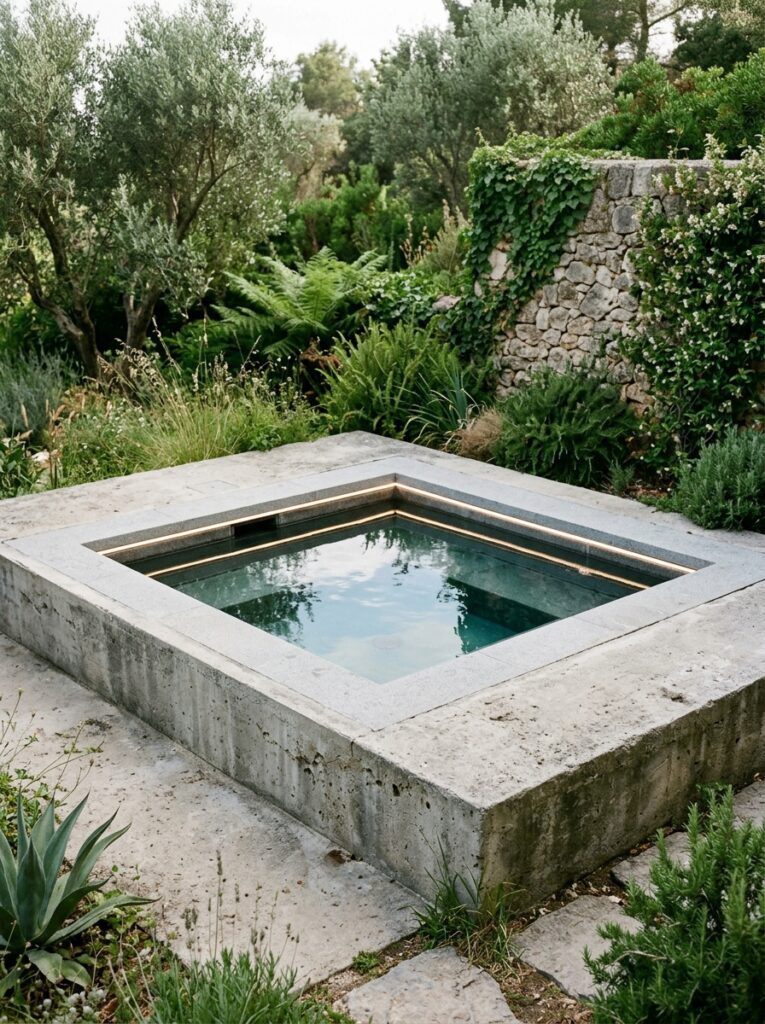
A minimalist outdoor jacuzzi installation removes every element that does not directly contribute to the experience of using it. No decorative planting, no peripheral furniture, no accessories beyond what the use of the jacuzzi specifically requires. The result is a space with a clean, considered quality where the jacuzzi itself is unambiguously the focal point of the outdoor area.
A single-material surround, concrete, stone, or composite decking in one consistent tone and finish, eliminates visual competition with the jacuzzi shell. Flush or recessed lighting in the surrounding surface provides evening illumination without visible fixtures that break the clean surface quality. This approach suits contemporary architecture and outdoor spaces where visual restraint is the design language of the whole garden. It is also specifically effective in small outdoor areas where additional planting, furniture, or accessories would create visual clutter that a larger garden would absorb without impact.
Backyard Jacuzzi with Fire Pit: Two Sources of Warmth Better Than One
Combining a jacuzzi with a fire pit in the same outdoor relaxation zone creates a space that offers two different and complementary warmth experiences within the same defined area. The fire pit provides a gathering point outside the water for guests who are not soaking. It provides warmth for the transition between leaving the jacuzzi and drying off during cool evenings. And it adds the specific atmospheric quality of real firelight that no electric alternative fully replicates.
The visual contrast between the still water surface of the jacuzzi and the active, flickering fire creates a dynamic outdoor space with a genuinely different character from either element alone. Positioning the fire pit close enough to the jacuzzi to be visible from within the water but far enough away to avoid any fire safety concern with the water surface and the jacuzzi equipment is the key practical planning decision for this combination. This is the outdoor setup that most consistently extends the jacuzzi’s season into the cooler months because the fire pit provides incentive to be outside regardless of whether the weather encourages it.
Corner Yard Jacuzzi Layout: Maximising Space Through Smart Placement
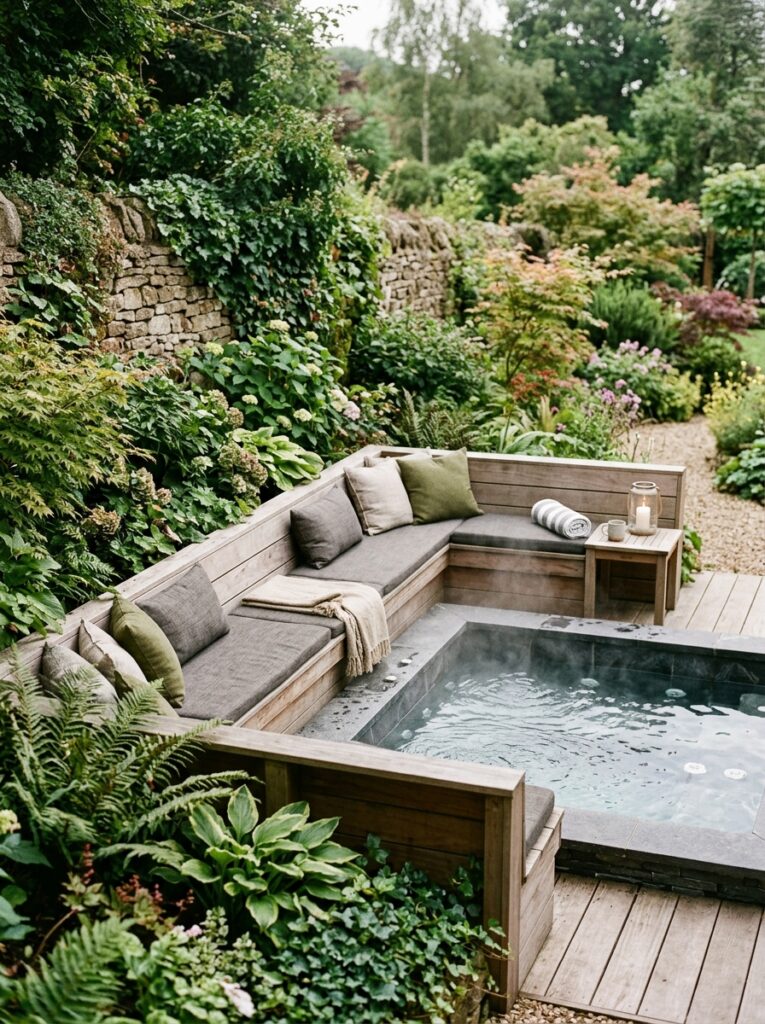
Positioning a jacuzzi in a corner of the garden recovers outdoor space that often goes underutilized because corners are the areas of a garden that standard furniture and planting arrangements are least well-adapted to fill. The jacuzzi’s typically square or rectangular shape fits naturally into a corner position and leaves the remaining garden area open and circulation-friendly.
Corner placement also creates two sides that face the interior of the garden, which means planting or screening on just the two external sides provides complete privacy coverage with less visual mass than a perimeter installation would require. Built-in seating in the corner area beside the jacuzzi, or L-shaped seating that continues the corner line, adds comfortable lounging space that uses the same geometric logic as the jacuzzi’s placement. For gardens where maximising the central lawn or living area is the priority, the corner jacuzzi consistently delivers the installation footprint with the least impact on the remaining outdoor space.
Jacuzzi with Outdoor Shower: The Complete Outdoor Bathing Experience
An outdoor shower positioned adjacent to the jacuzzi creates a complete outdoor bathing sequence that improves both the hygiene and the overall experience of jacuzzi use. Rinsing before entering the jacuzzi reduces the contamination of the water and extends the period between water changes and chemical treatments. Rinsing after soaking removes any chemical residue and allows for a complete outdoor refresh before returning inside.
An outdoor shower also adds significant usability to the jacuzzi area during summer months when it functions as a cooling alternative to soaking in warm water. A warm-tone timber shower enclosure or a simple copper or stainless steel wall-mounted shower head against a stone-tiled wall both create attractive installations that read as designed features rather than practical additions. Solar-heated water supplies suit the outdoor shower’s warm-season primary use without requiring a permanent plumbing connection to the home’s hot water system.
Poolside Jacuzzi Arrangement: The Resort Experience at Home
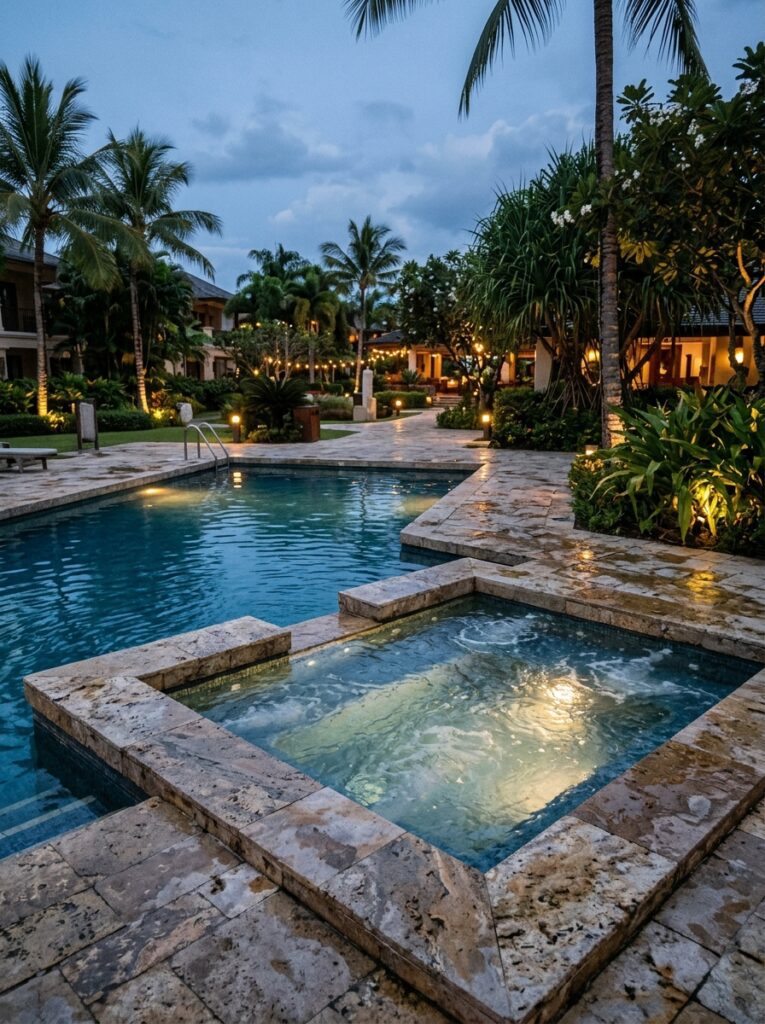
A jacuzzi positioned adjacent to an outdoor swimming pool creates a resort-quality outdoor water space where the two different water experiences, active swimming and passive soaking, complement each other within the same defined outdoor living area. The combination allows guests to move between the cooler pool and the warmer jacuzzi in the way that professional spa facilities are specifically designed around.
Coordinating the tile, stone, or composite surfaces of the pool surround and the jacuzzi area creates the unified visual quality that makes the combination read as a designed whole rather than two separate installations placed near each other. Consistent lighting across both water features, similar underwater LED colors in the pool and the jacuzzi, reinforces the visual connection after dark. The poolside jacuzzi is the outdoor water installation that delivers the highest quality of outdoor living experience for households where both active and passive water use are equally valued.
Fence-Enclosed Jacuzzi Space: Complete Privacy as the Priority
A fence-enclosed jacuzzi space prioritises complete privacy and security above all other design considerations. The full enclosure on all sides means the jacuzzi can be used at any time of day or evening without any concern about visibility from neighbouring properties, passing pedestrians, or upper-floor windows. For households where this level of privacy is the primary requirement for comfortable jacuzzi use, the fully enclosed space is the only installation approach that fully delivers it.
Timber fence panels in a contemporary slatted design create a clean, modern enclosure that suits most exterior home styles. Metal powder-coated panels suit contemporary architecture with their harder, more industrial quality. The interior of the enclosed space benefits from planting on the fence line to soften the hard boundary, lighting at multiple heights to create atmosphere after dark, and comfortable seating outside the jacuzzi for the time spent warming up or cooling down. A well-designed enclosed jacuzzi space reads as a proper outdoor room rather than a practical screen, which is the standard that transforms it from a functional installation into a genuine outdoor living destination.
String-Light Jacuzzi Setup: Affordable Atmosphere That Changes Everything
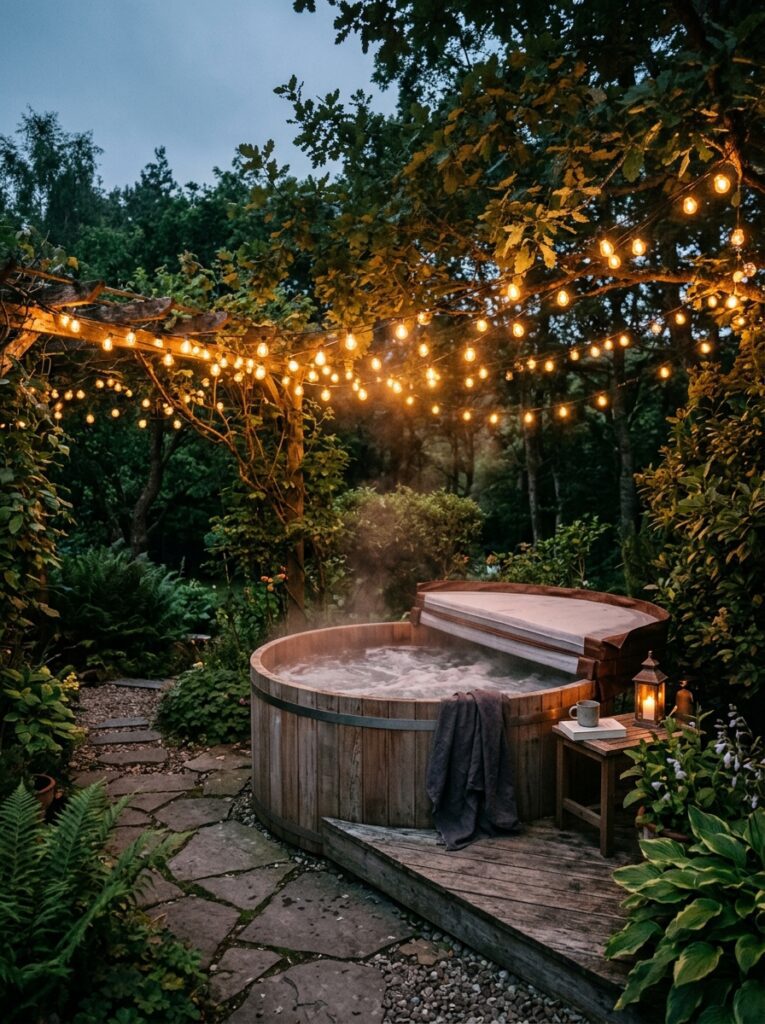
String lights are the single most affordable and most immediately effective transformation available for any outdoor jacuzzi area because they address the one quality that most jacuzzi spaces specifically lack: genuine warmth and atmosphere during evening use. A jacuzzi installed in good outdoor lighting is usable and comfortable. The same jacuzzi under a canopy of warm amber string lights is genuinely atmospheric in a way that functional lighting cannot create at any price.
Draping string lights from the pergola structure above, between posts around the jacuzzi perimeter, or along the fence line surrounding the area all create different versions of the same warm ambient effect. Warm white and soft amber bulbs create the most flattering and relaxing atmosphere. Cool white alternatives create a crisper, more contemporary quality that suits modern minimalist installations better. Mains-powered string lights on a dimmer switch allow the intensity to be adjusted from bright early evening to low and intimate as the evening progresses. For any jacuzzi installation where the evening experience is the primary use case, string lights are the improvement that delivers the most atmosphere per pound spent anywhere in the outdoor space.
Planning an Outdoor Jacuzzi: The Decisions Worth Making Before Installation
The decisions made before a jacuzzi is installed determine more of the final quality than any decisions made afterward. Position determines sun exposure throughout the day and the privacy requirements that the surrounding design must address. Foundation type determines the long-term stability and visual quality of the installation. Access to electricity and water determines the practical constraints on where the jacuzzi can be placed.
Considering how the jacuzzi will be used most often before choosing the installation approach ensures the design serves the actual use rather than only the visual impression. Evening soakers need different lighting and privacy considerations from those who primarily use the jacuzzi during the day. Families with children have different safety and access requirements from couples who use it primarily for relaxation. Getting these decisions right before installation ensures that the jacuzzi becomes the consistently used and genuinely valued outdoor feature it was intended to be rather than an expensive addition that does not quite fit how the household actually lives.