
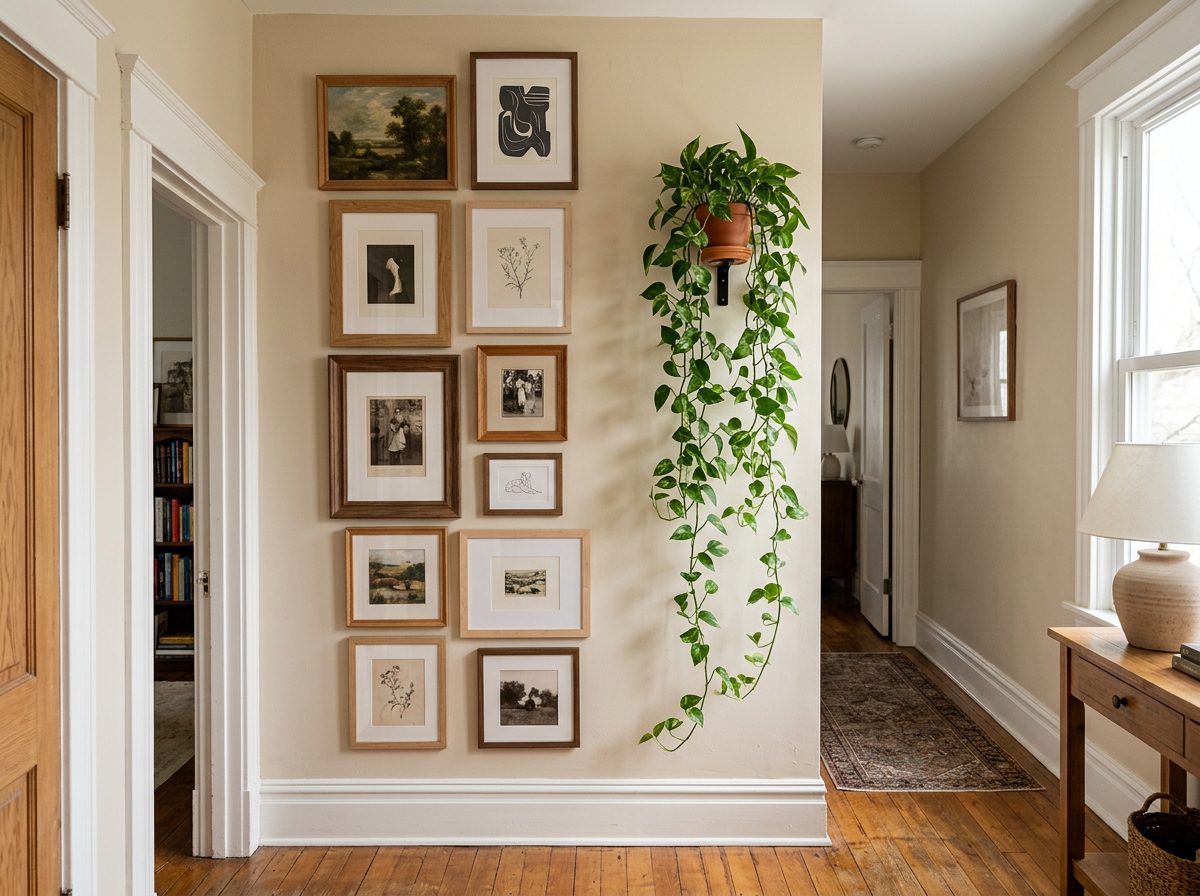
Every home seems to have one. That awkward sliver of wall beside a doorway, at the end of a hallway, between two windows, or alongside the stairs. It is too narrow for a piece of furniture, too tall to ignore, and somehow it always ends up completely bare while you decorate around it.
I used to walk past a strip of wall like this in my own hallway every single day, telling myself I would figure it out eventually. Once I finally started experimenting, I realized these tall narrow walls are not a problem at all. They are actually some of the best decorating opportunities in a home, because their unusual proportions invite ideas that would never work on a regular wall.
This list gathers more than twenty smart, stylish ways to decorate a tall narrow wall, from quick budget fixes to statement-making moments that make the awkward corner everyone ignores become the spot everyone comments on.
Stacked Vertical Gallery Wall
A vertical gallery is the most natural fit for this shape of wall. Instead of spreading frames wide, stack two, three, or four pieces in a single column running up the wall. The arrangement emphasizes the height in a deliberate, elegant way.
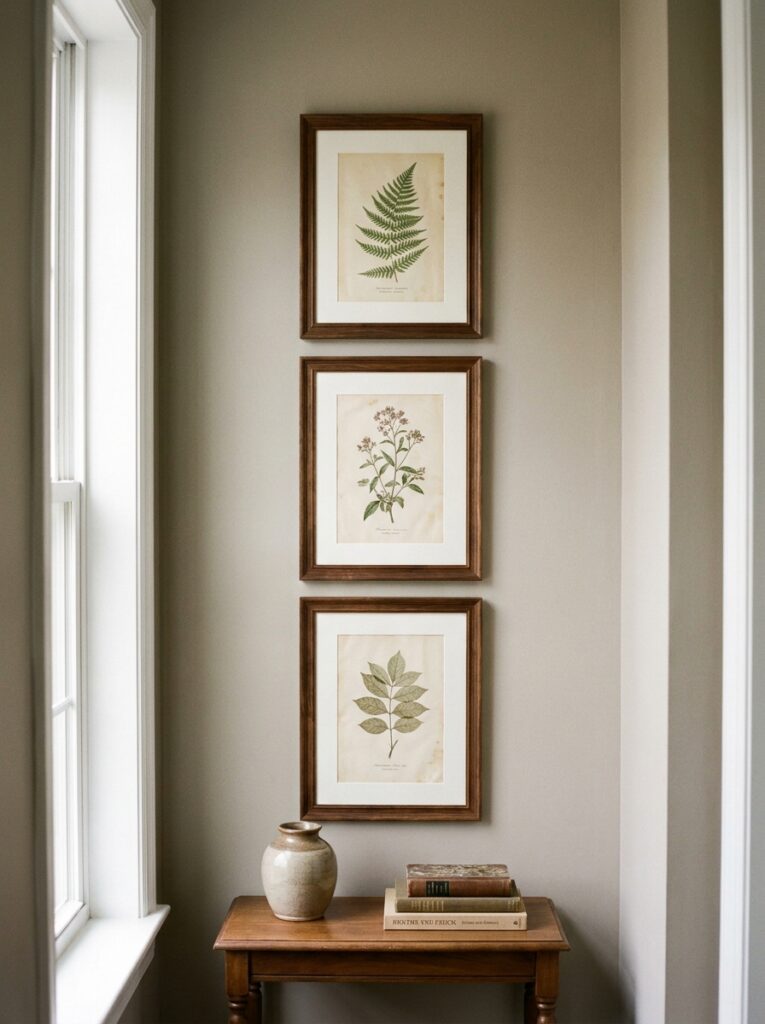
Keep the frames the same width for a clean, orderly look, or vary them slightly for something more relaxed. Matching frames with different art inside strikes a lovely balance between cohesion and interest.
One Dramatic Oversized Vertical Print
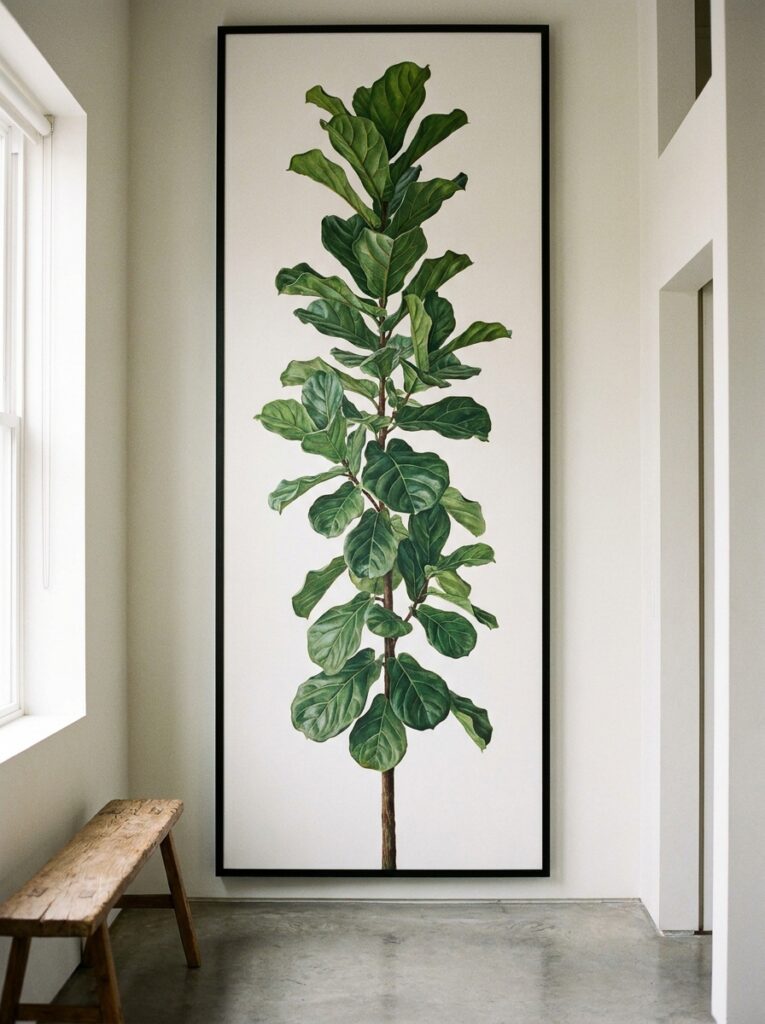
Sometimes the boldest move is a single statement. One tall, narrow piece of art sized generously for the wall creates instant impact and makes the space feel intentional rather than leftover.
Botanical prints, elongated landscapes, figure sketches, and abstract line art all work beautifully in vertical formats. Oversized prints are widely available at affordable prices, and a simple frame keeps the focus on the art itself.
A Full-Length Mirror
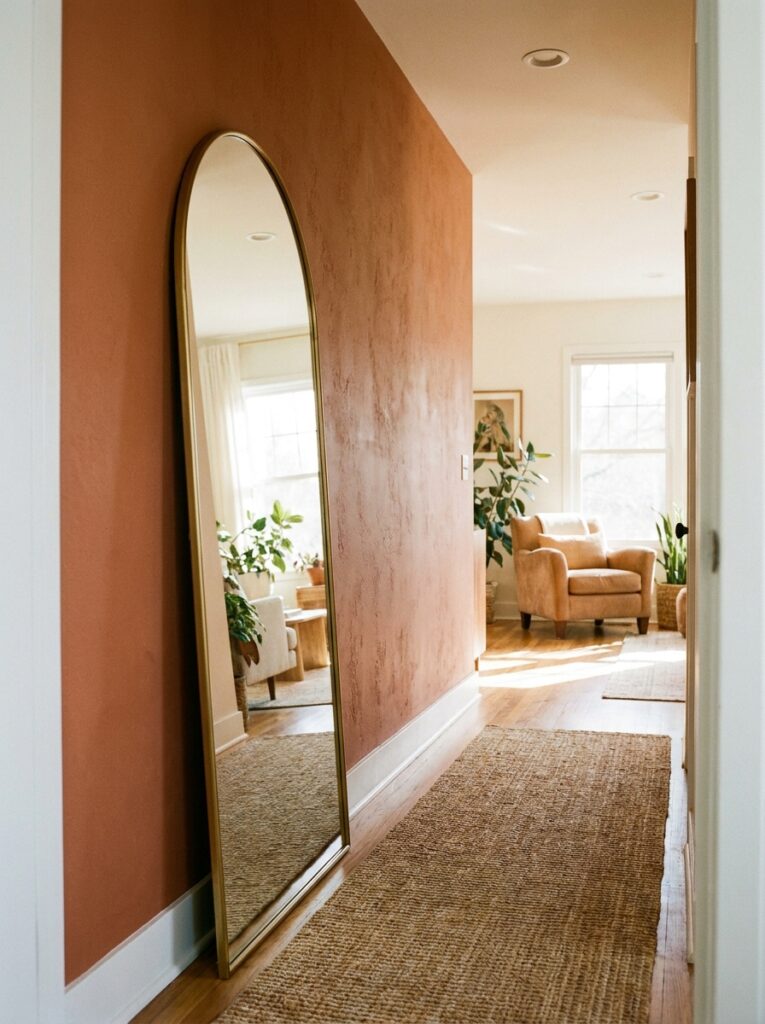
A tall narrow wall practically begs for a full-length mirror. It fits the proportions perfectly, bounces light around the room, and makes tight spaces like hallways feel noticeably bigger and brighter.
An arched mirror softens the vertical lines and adds a touch of elegance, while a slim rectangular mirror leans clean and modern. Leaning a tall mirror against the wall works too, as long as it is safely secured.
Vertical Wood Slat Paneling
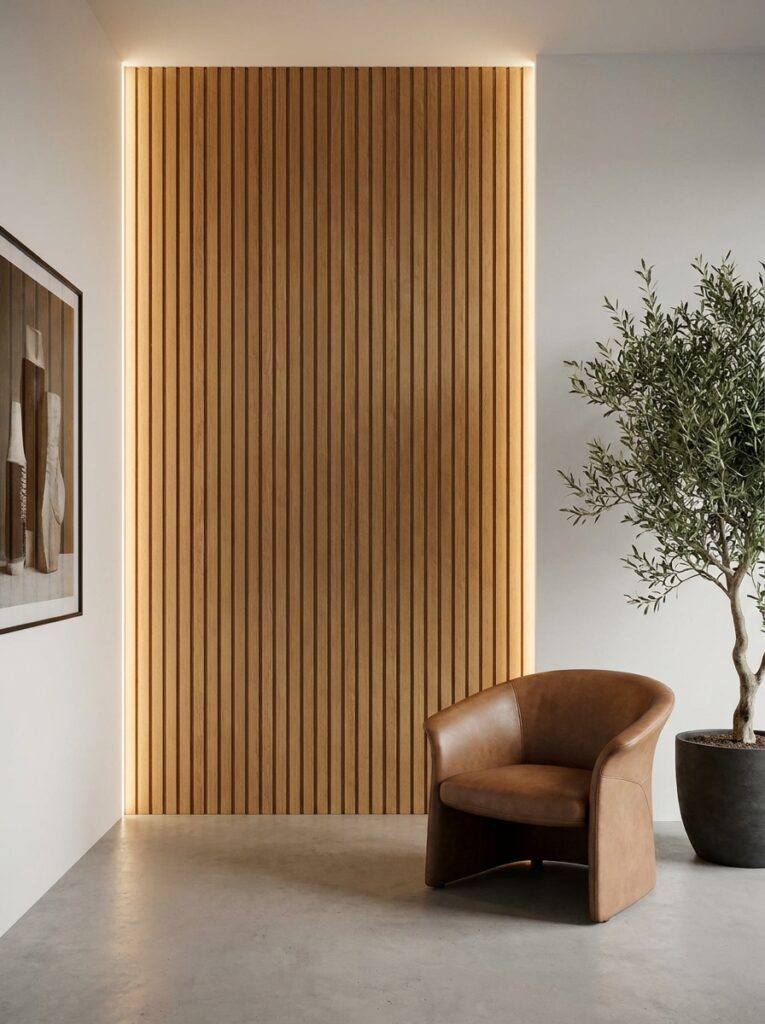
Wood slat panels have become one of the most popular wall treatments for good reason. Thin vertical slats running floor to ceiling add warmth, texture, and architectural interest, and the vertical lines flatter a narrow wall perfectly.
Peel and stick slat panels make this achievable for renters and beginners. The finished look reads as high-end and custom, even when the project took a single afternoon.
A Cascading Trailing Plant
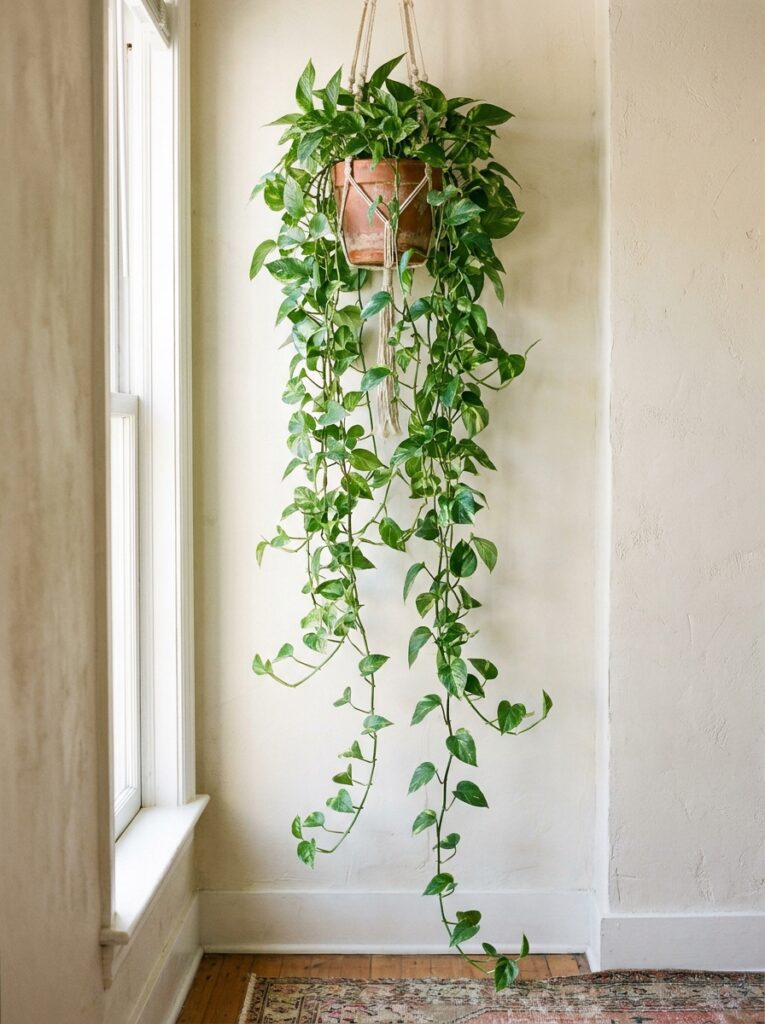
A single hanging planter mounted high on the wall with a trailing plant spilling downward turns the whole strip into a living feature. Pothos, string of pearls, and philodendron all trail beautifully and tolerate a range of light conditions.
The plant grows into the space over time, softening the wall with greenery that no printed art can quite match.
Slim Ladder Shelf
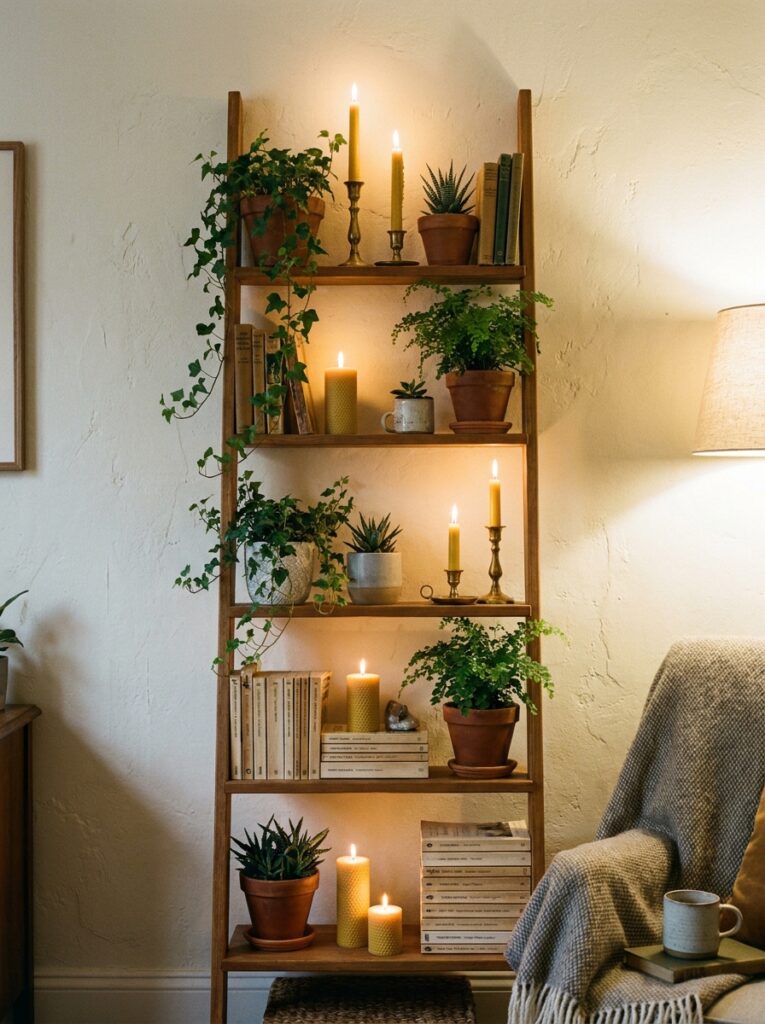
A narrow ladder shelf leans against the wall and provides styling space without demanding much floor area. Each rung holds a small vignette of books, plants, candles, or ceramics.
This option adds function as well as beauty, which makes it especially useful in hallways and entryways where a little extra storage never hurts.
Vertical Plate Wall
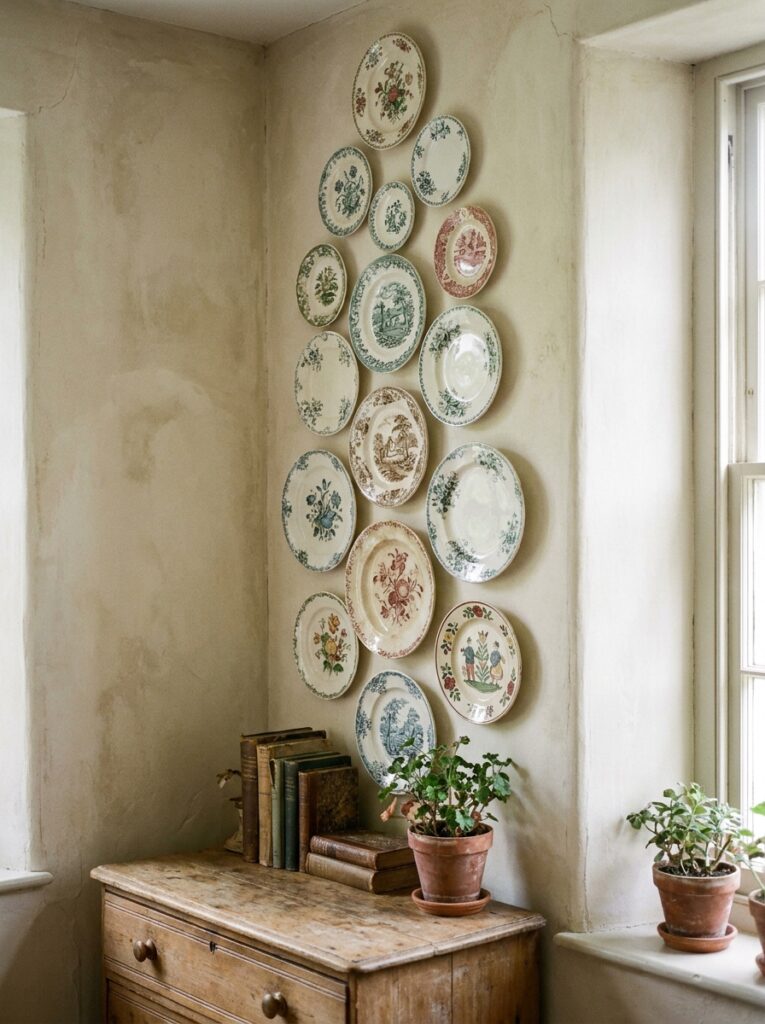
Decorative plates arranged in a climbing column bring charm and a collected, old-world feel to a narrow wall. Vintage plates, hand-painted pieces, and modern ceramics all work, either matching or delightfully mismatched.
Plate hangers are inexpensive and the plates themselves are thrift store treasures, making this one of the most budget-friendly ideas on the list.
Wall-Mounted Candle Sconces
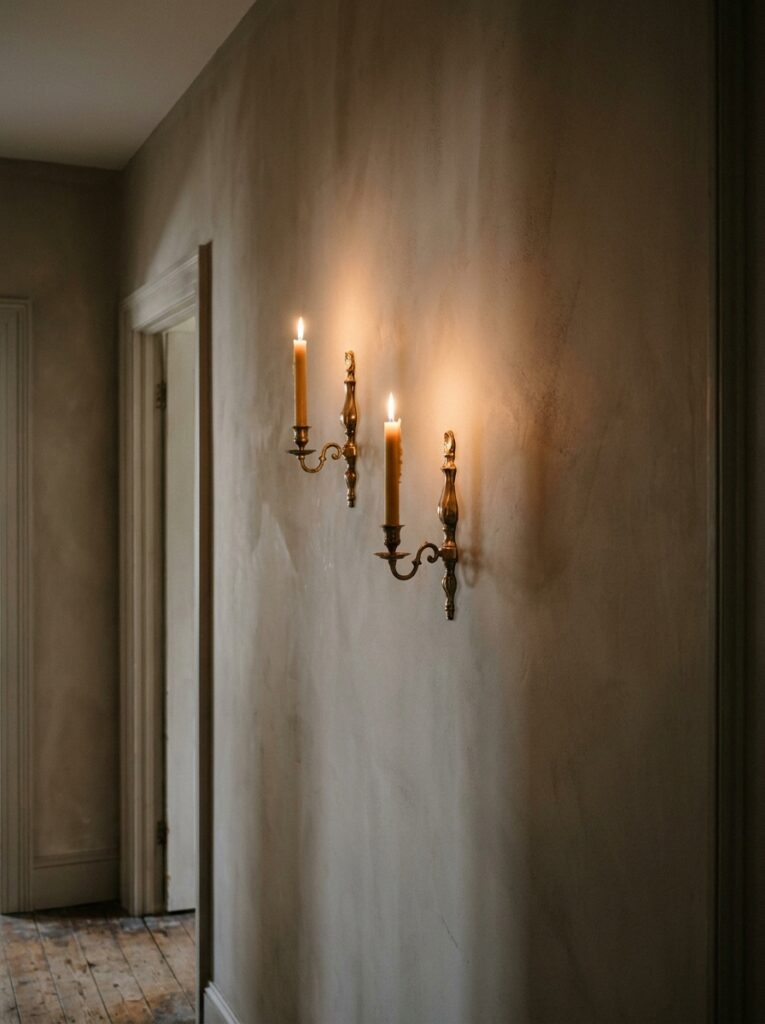
A pair of candle sconces mounted vertically, one above the other, or a single dramatic sconce creates a warm, romantic moment on a narrow wall. Flameless candles give you the glow without any worry.
Brass, black iron, and wood sconces each set a different tone, from traditional to farmhouse to modern.
Hanging Textile or Tapestry
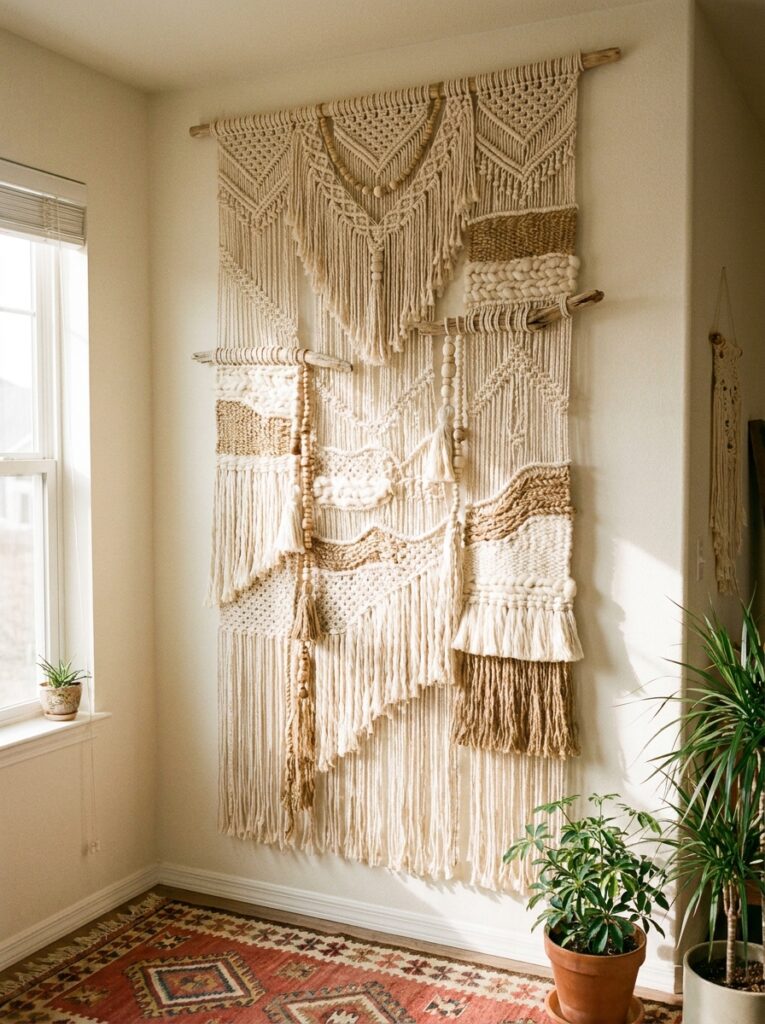
A woven wall hanging or vertical tapestry adds softness and texture that framed art cannot. Long macrame pieces, woven fiber art, and fabric panels suit the tall format naturally.
Textiles also help with echo in hallways and stairwells, quietly improving the acoustics while looking beautiful.
Floating Shelves in a Column
Two or three small floating shelves stacked vertically transform the wall into a display zone for tiny treasures. Keep each shelf simply styled with one or two objects so the column feels curated rather than crowded.
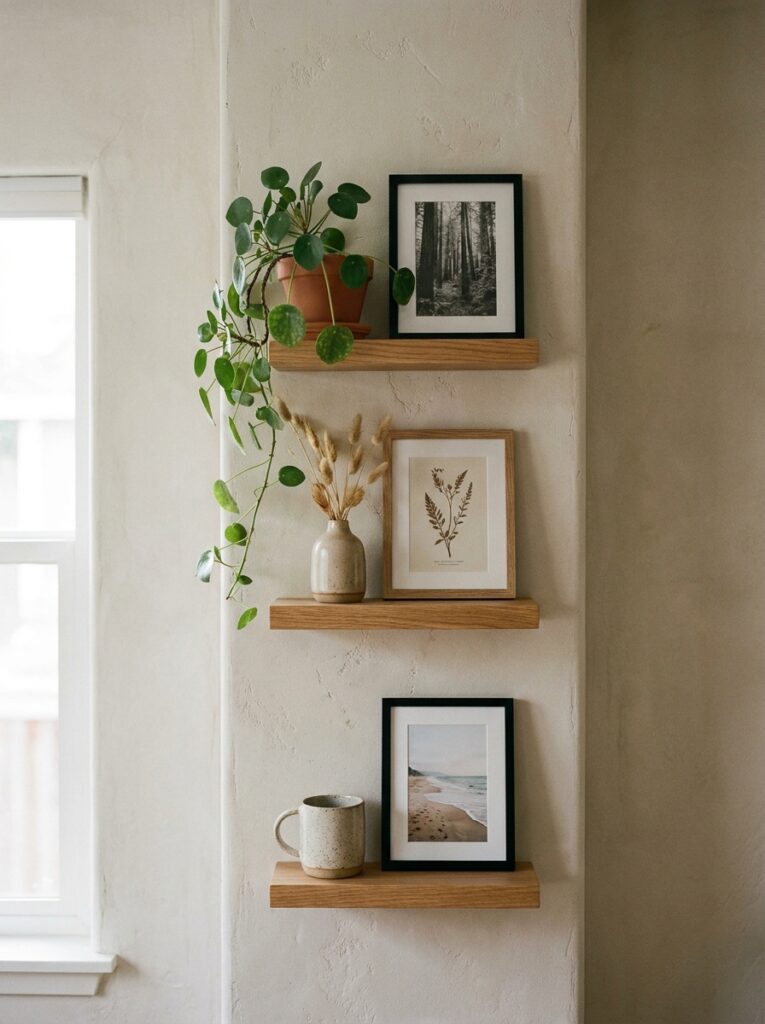
Small plants, framed photos, candles, and pottery all shine on narrow floating shelves.
Tall Branch or Dried Stems in a Floor Vase
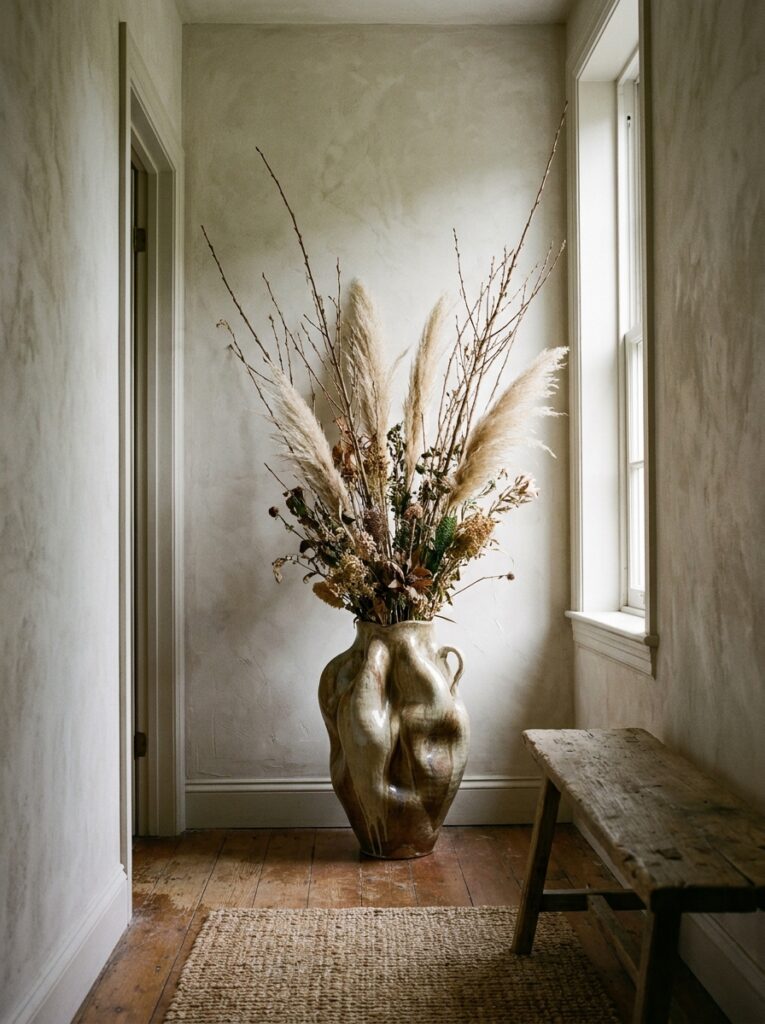
A large floor vase holding tall dried branches, pampas grass, or eucalyptus stems fills vertical space with organic shape and movement. The look is sculptural, low-maintenance, and easy to refresh seasonally.
This idea works especially well at the end of a hallway, where the arrangement greets you like a piece of living art.
Vertical Wallpaper Panel
Wallpapering just the narrow wall creates a defined, intentional feature panel. Bold botanical prints, striped patterns, and mural-style papers all turn the awkward strip into a designed moment.
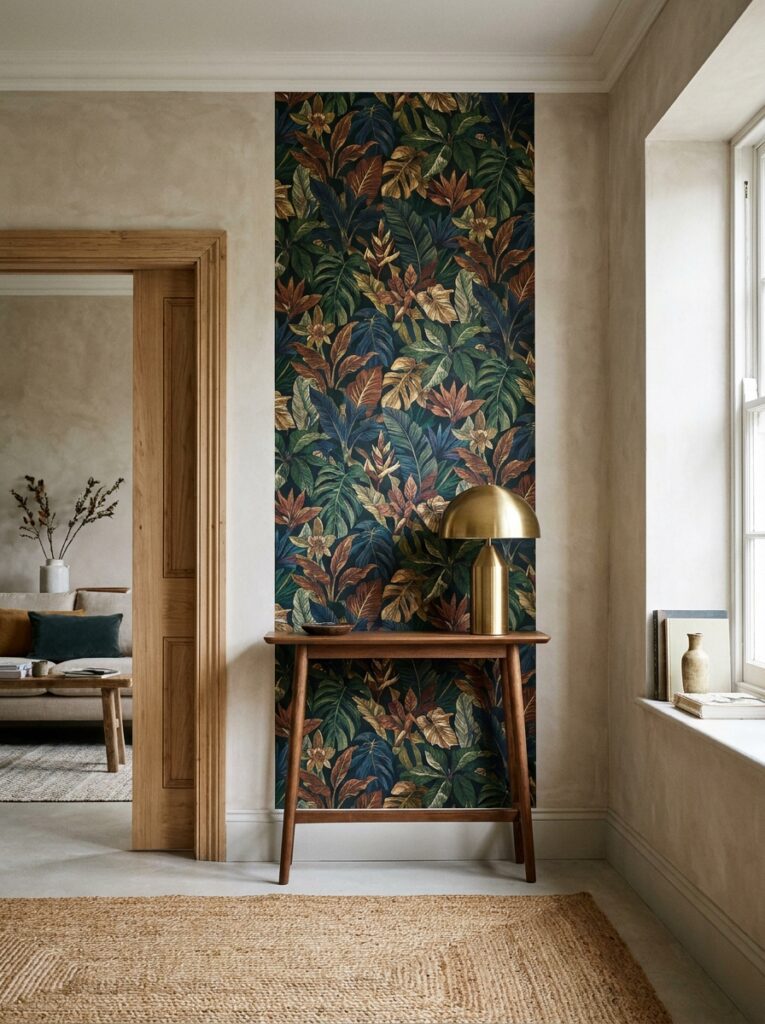
Peel and stick wallpaper keeps the project renter-friendly and reversible, and a narrow wall usually needs only a single roll.
A Column of Woven Baskets
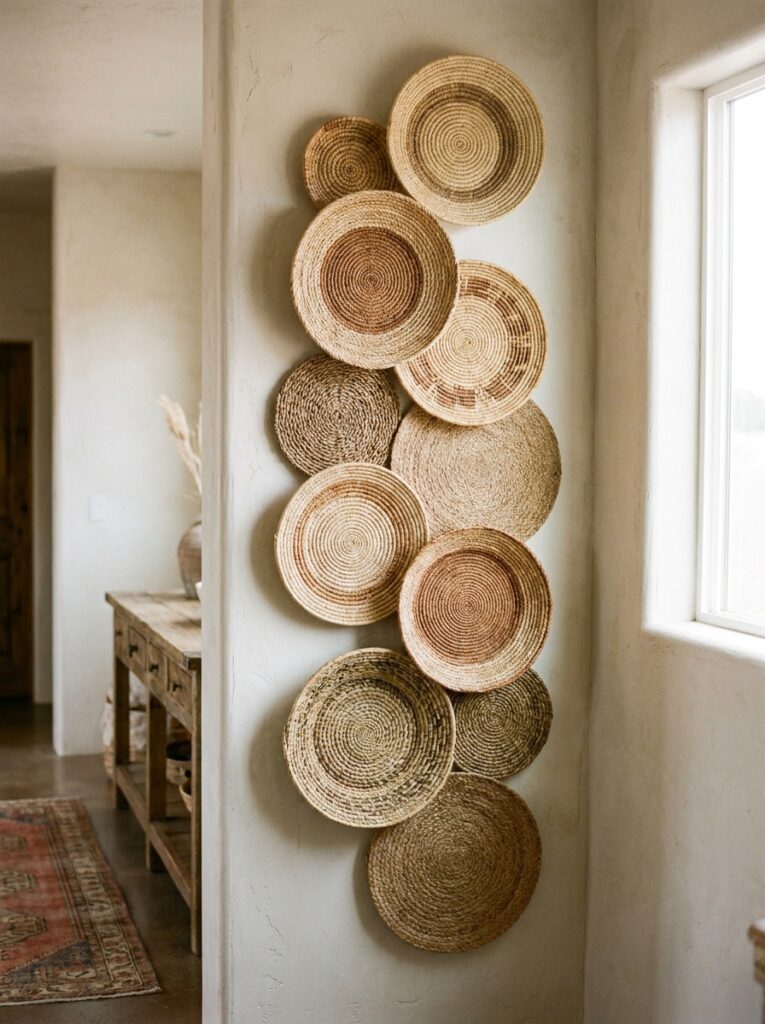
Flat woven baskets mounted in a vertical arrangement add texture, warmth, and global charm. Vary the sizes and weaves slightly so the column feels organic and collected.
This idea brings dimension to the wall in a way that flat art cannot, and baskets are affordable finds at markets and home stores.
Common Mistakes to Avoid
The most frequent mistake is hanging one small piece of art in the middle of a tall wall. A lone undersized frame floating in all that vertical space looks lost and accidental. Either scale up or build a vertical arrangement.
Another misstep is ignoring the wall entirely because it feels too hard. Bare narrow walls read as unfinished, and even the simplest idea from this list changes that immediately.
Overcrowding causes trouble too. Narrow walls have limited visual room, so pieces jammed edge to edge feel chaotic. Breathing space around and between items keeps the display elegant.
Finally, hanging things too high is a classic error. The instinct on a tall wall is to drift upward, but arrangements should still relate to eye level where people actually look.
Conclusion
That tall narrow wall you have been walking past is not a design problem. It is an invitation. Awkward proportions push you toward vertical arrangements, single statement pieces, and creative solutions that end up being more memorable than anything on a standard wall.
Pick the idea that fits your style and budget, whether that is a stacked gallery, a trailing plant, a dramatic mirror, or a simple column of thrifted plates. Emphasize the height, keep the display cohesive, and give it decent light. Do that, and the forgotten sliver of wall quietly becomes one of the best-looking corners of your home.